Author Once. Deliver Everywhere.
niAuthor enables OEMs to author technical content once and deliver it across languages, formats, customer locations and service teams — maintaining accuracy, brand consistency and OEM control throughout every translation.
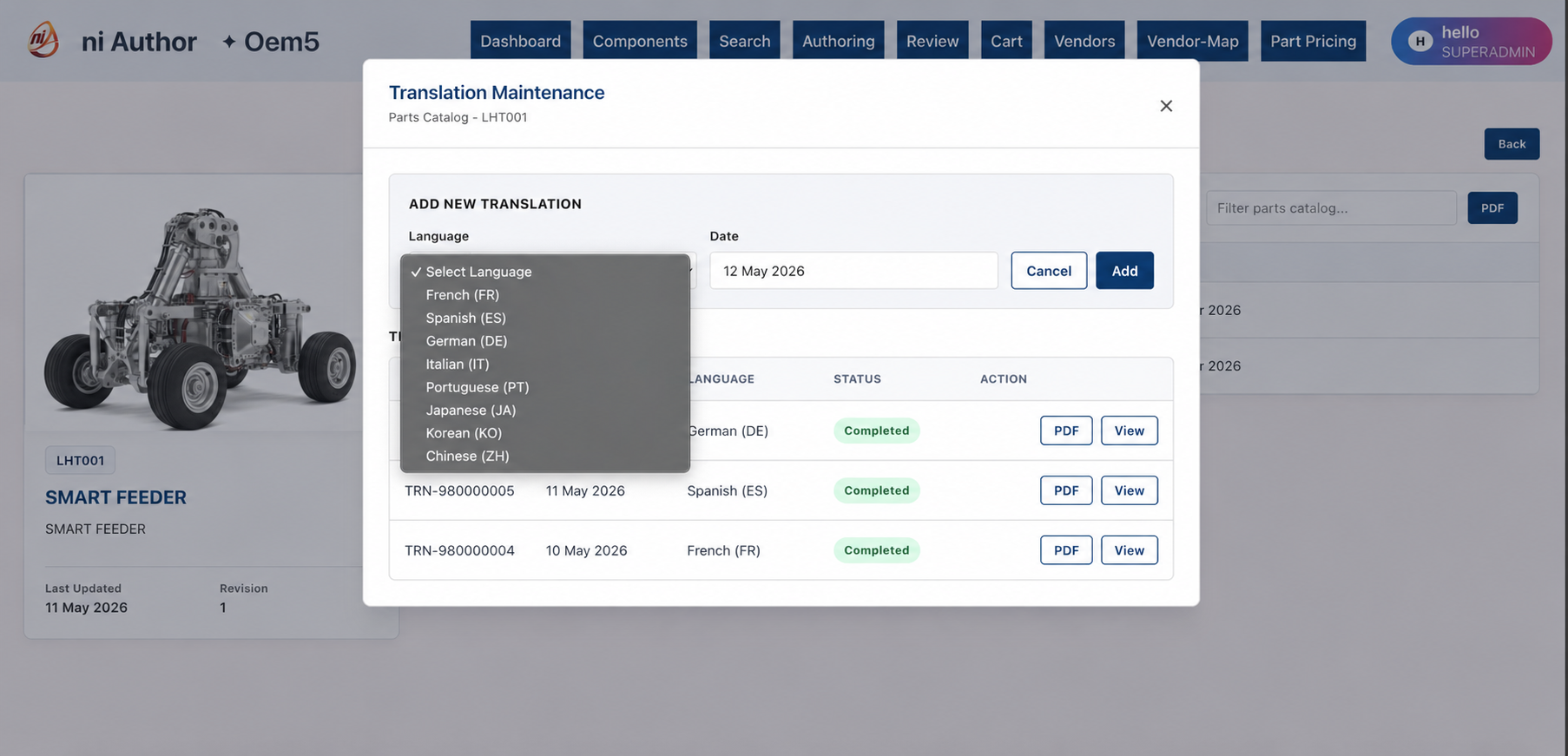
Technical knowledge that travels across the world without losing accuracy.
niAuthor's translation pipeline is built into the same authoring environment — so the same structured content that powers your PDFs and web manuals flows directly into a controlled, glossary-driven translation workflow. No export, no reformatting, no rework.
The structured source is the translation source.
Because niAuthor content is authored in a schema-driven environment, every paragraph, step, warning and table is already structured as translatable segments. No manual extraction is needed — the translation pipeline begins exactly where authoring ends.
-
Schema-driven segments ready for translation immediately after authoring -
No file conversion or export step required -
Consistent content structure maintained across all languages
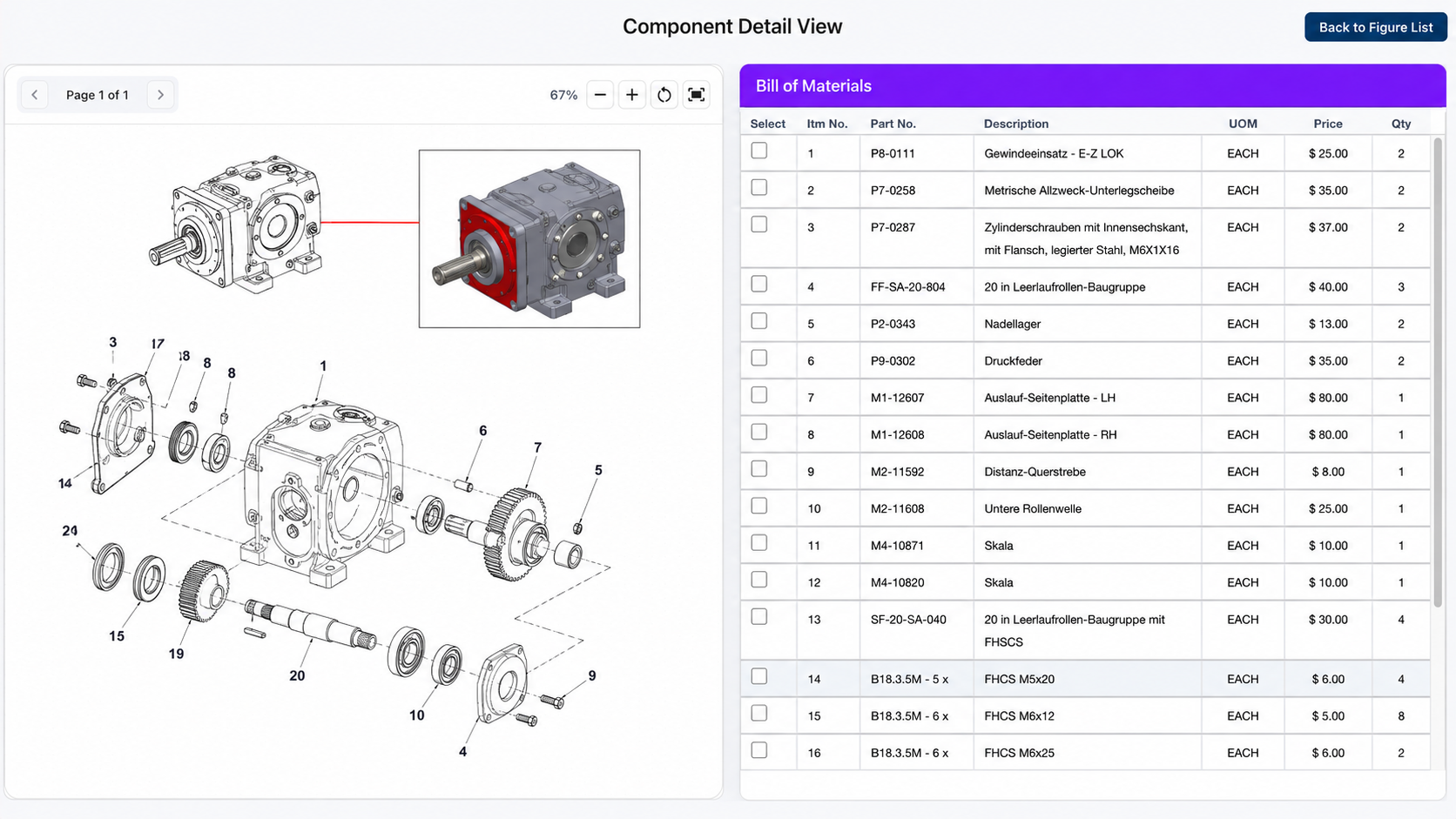
OEM terminology stays protected across every language.
Technical terms, product names, safety labels and part references are controlled through an OEM-managed glossary. Placeholders are protected so that part numbers, unit values and critical tags are never accidentally translated or modified.
-
OEM-controlled glossary enforced across all language outputs -
Part numbers, unit values and critical tags fully protected -
Consistent terminology and brand language across all markets
Deliver approved technical content across your global markets
Translated content reviewed and approved before it reaches customers.
Every translated segment goes through a structured review and approval workflow. OEM reviewers validate the quality and accuracy of translated content within the same platform — with a clear status trail from translation through to approval and release.
-
Segment-level review and approval status for each language -
Threaded reviewer comments tied to specific translated segments -
Full audit trail from source authoring to translated release
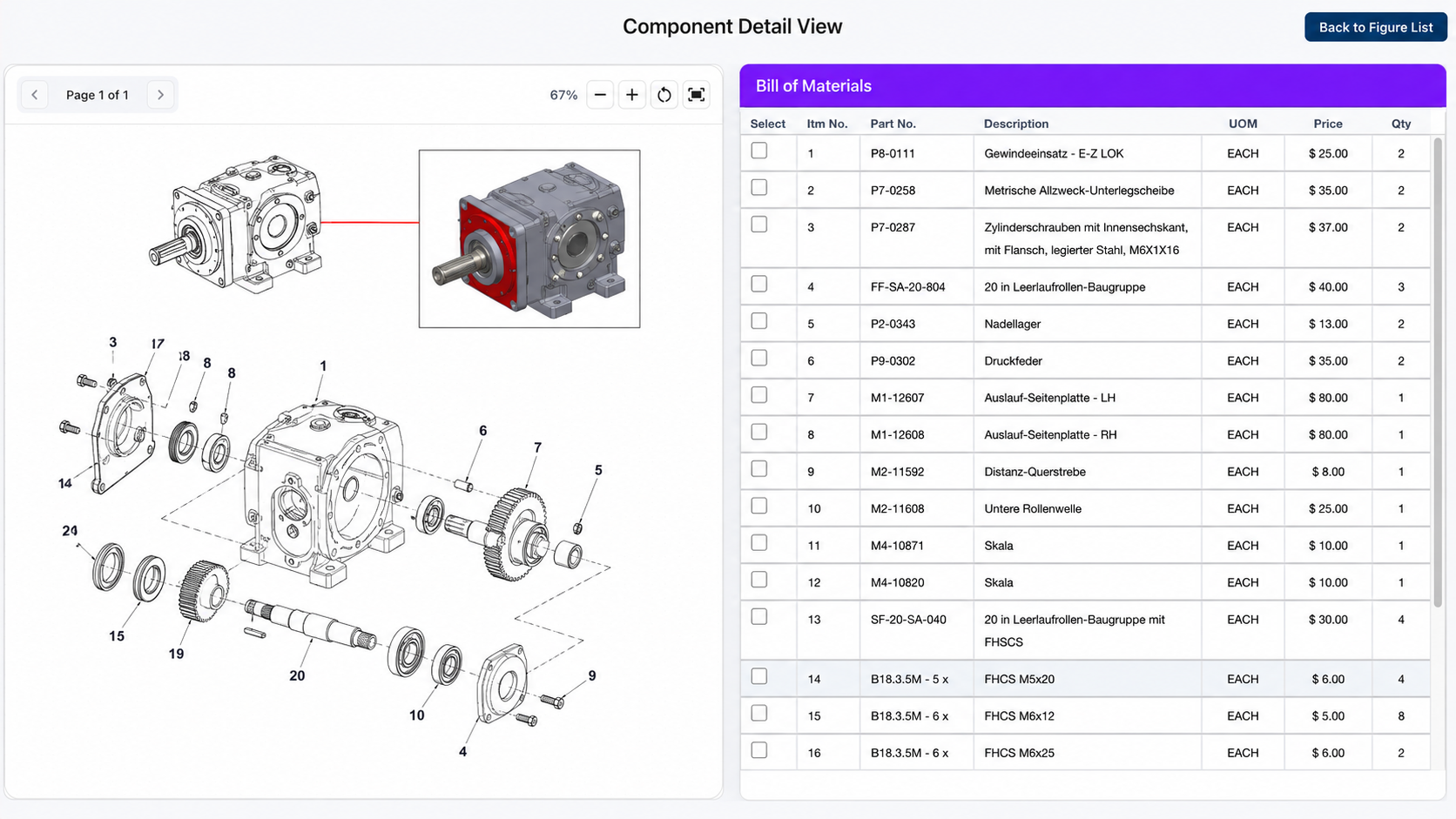
PDF and web in every language from the same approved source.
Once translated content is approved, niAuthor generates language-specific PDF and interactive web outputs simultaneously — maintaining the same structure, figures and safety content as the original. No reformatting. No duplication. Full consistency across markets.
-
Language-specific PDF and web outputs from one release action -
Figures, tables and safety content preserved across languages -
Consistent OEM brand experience in every market
Every team in one connected translation environment.
niAuthor gives OEM authors, reviewers, translators and approvers clearly defined roles within a single platform — keeping the translation lifecycle controlled and traceable from start to delivery.
See how niAuthor delivers your technical content to the world.
Start with one manual and one language. See how structured authoring, controlled translation, approval workflows and multilingual publishing come together in one connected OEM platform.